Repeaters and Nets Explained: A Plain-Language Guide
If you are new to ham radio, repeaters and nets are two of the first things you will encounter. They are the foundation of local amateur radio activity, and understanding how they work will make your first weeks on the air much smoother.
What Is a Repeater?
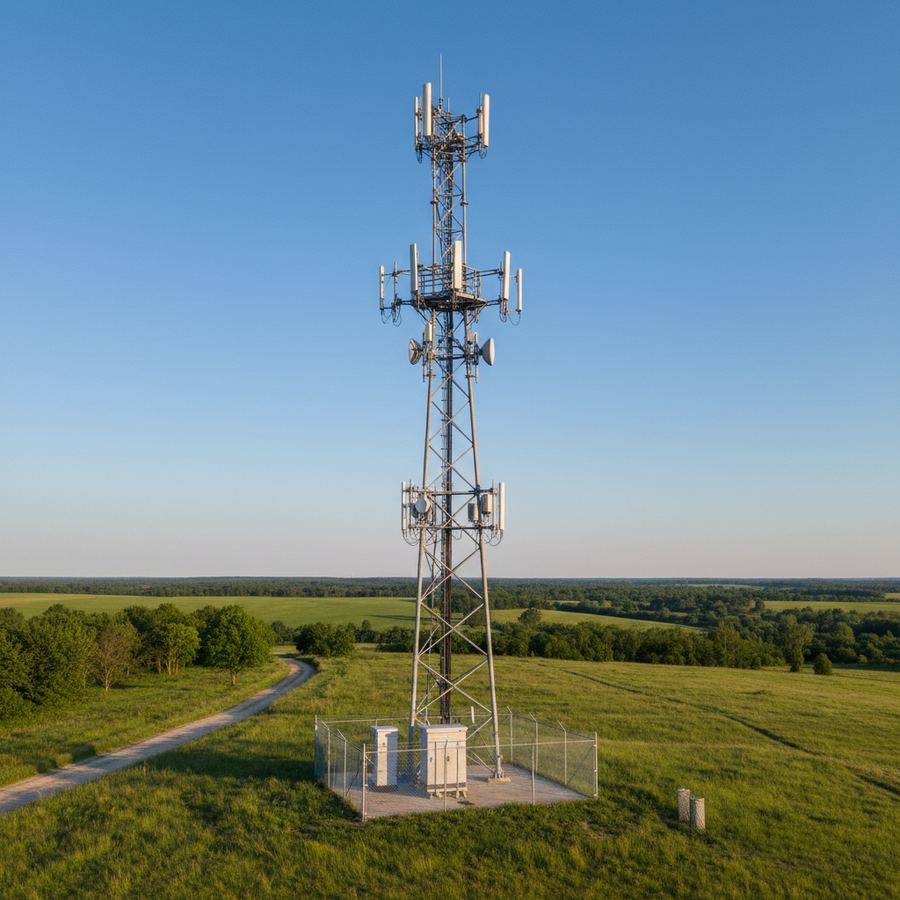
A repeater is a radio station, usually installed on a tall building, tower, or hilltop, that receives a signal on one frequency and simultaneously retransmits it on another. The purpose is range extension. A handheld radio might reach 5 to 15 kilometres on its own. Through a well-placed repeater, that same radio can communicate over 50 to 100 kilometres or more.
Repeaters operate on VHF (typically the 2-metre band, around 146 MHz) and UHF (typically the 70-centimetre band, around 440 MHz). These frequencies travel in roughly straight lines, so height is everything. A repeater on a tall tower or mountaintop has a huge coverage advantage over a radio at ground level.
How the Frequency Offset Works
A repeater uses two frequencies: an input (where it listens) and an output (where it transmits). The difference between them is called the offset. On the 2-metre band, the standard offset is 600 kHz. On 70 cm, it is typically 5 MHz. When you program a repeater into your radio, you set your transmit frequency to the repeater's input and your receive frequency to the repeater's output. Most modern radios handle this automatically once you enter the output frequency and tell it the offset direction (plus or minus).
CTCSS Tones and Access
Most repeaters require a CTCSS tone (Continuous Tone-Coded Squelch System) to activate. This is a sub-audible tone, typically between 67 and 254 Hz, that your radio sends along with your voice signal. The repeater only opens when it hears the correct tone. This prevents interference from other signals on the same frequency and keeps the repeater from being triggered by noise.
When you program a repeater into your radio, you need three pieces of information: the output frequency, the offset direction, and the CTCSS tone. All three are usually listed in repeater directories.
Finding Repeaters in Your Area
Several resources list active repeaters:
- RepeaterBook (repeaterbook.com) is the most widely used online directory. You can search by location, band, or callsign. It covers North America and many other regions.
- Your local radio club almost certainly maintains one or more repeaters. Their website will have the details.
- Radio Amateurs of Canada (RAC) publishes repeater listings for Canadian operators.
- Scanning. If you have a radio that can scan, you can sweep through the 2-metre and 70-cm bands and listen for activity. This is a good way to discover what is active near you.
Once you find a repeater, listen before you transmit. Spend a few days monitoring to get a feel for who uses it, what the culture is like, and when nets happen. This is standard advice and genuinely useful.
Basic Repeater Etiquette
Repeaters are shared resources, and there are conventions around using them respectfully:
- Identify yourself. Give your callsign when you start transmitting and at least every 30 minutes during a conversation. This is a legal requirement, not just etiquette.
- Leave gaps. After you finish a transmission, pause briefly before the other station responds. This leaves room for someone to break in with emergency or priority traffic.
- Keep it clean. Repeaters are open to anyone with a radio. Language and topics should be appropriate for a public forum.
- Do not kerchunk. Keying up and dropping without identifying (called kerchunking) is technically illegal and annoying. If you want to test your radio, say your callsign and "testing."
- Yield to emergencies. If someone calls with an emergency, all other traffic stops. This is non-negotiable.
What Is a Net?
A net is a scheduled, organized on-air meeting. It takes place on a specific frequency (often a repeater) at a regular time. A net control station (NCS) runs the session. The NCS opens the net, invites check-ins, manages the flow of conversation, and closes the net when it is done.
Nets serve different purposes:
- Social nets are the most common at the local level. Operators check in, share brief updates, and keep the community connected. These are relaxed and welcoming to newcomers.
- Traffic nets handle formal written messages (called radiograms) using the National Traffic System format. These are more structured and serve a public service function.
- Emergency and weather nets activate during severe weather, natural disasters, or other events that require coordinated communications. Participation is typically limited to trained operators.
- Technical and special interest nets focus on specific topics. You might find nets dedicated to antenna building, digital modes, or specific equipment brands.
How to Join a Net
Joining a net is straightforward. Tune to the correct frequency before the net starts. When the NCS calls for check-ins, give your callsign clearly and wait to be acknowledged. On most social nets, the NCS will come back to you during the round and give you a chance to say a few words or pass if you prefer.
For your first net, just listen to a full session before checking in. You will hear how the format works, how other operators check in, and what the pace is like. Then check in the following week. Nobody expects a new operator to know everything. Experienced hams are used to hearing new callsigns and will generally go out of their way to make you feel welcome.
Finding Nets
Check your local club's website for net schedules. Many clubs run a weekly net on their repeater. You can also search online for net directories, or simply listen on active repeaters in the evening hours when most social nets take place.
VHF and UHF Basics for New Operators
As a new operator, you will most likely start on VHF (2 metres) and UHF (70 centimetres). These bands are where repeaters live, where local activity happens, and where a handheld radio is most useful. Here are the practical things worth knowing:
- Line of sight matters. VHF and UHF signals do not bend around the earth the way HF signals do. Height and clear sightlines improve your range significantly. Standing on a hill or even being on the second floor of a building can make a noticeable difference.
- Rubber duck antennas are a compromise. The short antenna that comes with most handhelds works, but it is not efficient. An aftermarket antenna, even a modest one, can improve your signal noticeably.
- UHF penetrates buildings better than VHF. If you operate mostly indoors or in urban areas, 70 cm may give you better results for simplex (radio-to-radio) contacts.
- VHF has slightly better range in open terrain. For hilltop-to-hilltop or rural use, 2 metres has a small edge.
Repeaters and nets are the starting point for most hams, and for good reason. They provide a built-in community, a structured way to learn operating practices, and reliable local communications. Once you are comfortable on a repeater, the rest of the hobby, from ragchewing on HF to digital modes to logging your contacts, opens up naturally.